

The first 24 and 48 hours
A freshly installed floor looks finished long before it is. The resin is still hardening underneath, and this is when it marks most easily.
- Before 24 h: nobody walks on it, pets included. Keep doors and windows set so dust, leaves and insects stay out, and keep water off it.
- From 24 h: foot traffic. Clean shoes or socks. No heavy furniture yet, and nothing dragged.
- From 48 h: vehicles and furniture can come back. Lift furniture into place; do not slide it.
Those are the data-sheet times under normal conditions. Very cool or very humid weather can slow the cure; we confirm the times for your job at handover. For the first few days, also avoid leaving rubber mats, wet cardboard boxes or plant pots directly on the floor.
Daily and weekly cleaning
Daily, or as needed: a soft-bristle broom or a dry microfiber dust mop. Dust and sand are the real enemy of gloss, because under shoes they act like fine sandpaper. In beach homes in Guanacaste or Jacó, a doormat at each entrance makes a big difference.
Once a week: mop with water and a small amount of neutral soap. Rinse the mop often and do not leave puddles of soapy water. They dry into a dull film that makes you think the floor has lost its shine when it is only residue.
Spills: the surface is sealed and non-porous, so almost everything comes off with a damp cloth. Still, wipe up motor oil, brake fluid, wine, coffee and dyes promptly. The less time they sit, the better.
In shops and warehouses the logic is the same at a different scale: frequent sweeping, and machine scrubbing with soft brushes and neutral detergent.
Which products to use, and which to avoid
Use:
- pH-neutral soap or detergent, diluted in water.
- Microfiber mops and cloths; soft-bristle brooms.
- For a stubborn spot, warm water and a soft nylon brush.
Avoid:
- Abrasives: steel wool, green scouring pads, powdered cleansers. They scratch the seal coat.
- Acids and harsh chemicals: straight vinegar, acid-based cleaners, descalers, concentrated bleach. Used repeatedly, they dull the surface.
- Waxes and polishes: the floor does not need them, and they leave a layer that traps dirt and makes it slippery.
- Too much soap, or soap with softeners: these leave a film.
- Solvents such as paint thinner or acetone to “get a stain out”: they can damage the seal coat. Ask us first.
If in doubt about a product, test it in an out-of-the-way corner first.
Furniture: protect the feet
The most common damage to a residential epoxy floor does not come from use. It comes from a chair. A metal leg with a missing or worn cap puts all the weight on one sharp edge.
- Fit felt pads or rubber caps on chairs, tables, sofas and beds. Check them now and then: felt collects grit and turns into sandpaper.
- To move fridges, washers or large furniture, lift them, or put a blanket or thick cardboard underneath. Do not drag.
- For office chairs, choose soft casters (rubber or polyurethane) or use a chair mat.
- Avoid dragging sharp metal objects: tools, floor jacks without a base, pallets with protruding nails.
Garages: hot tires and oil
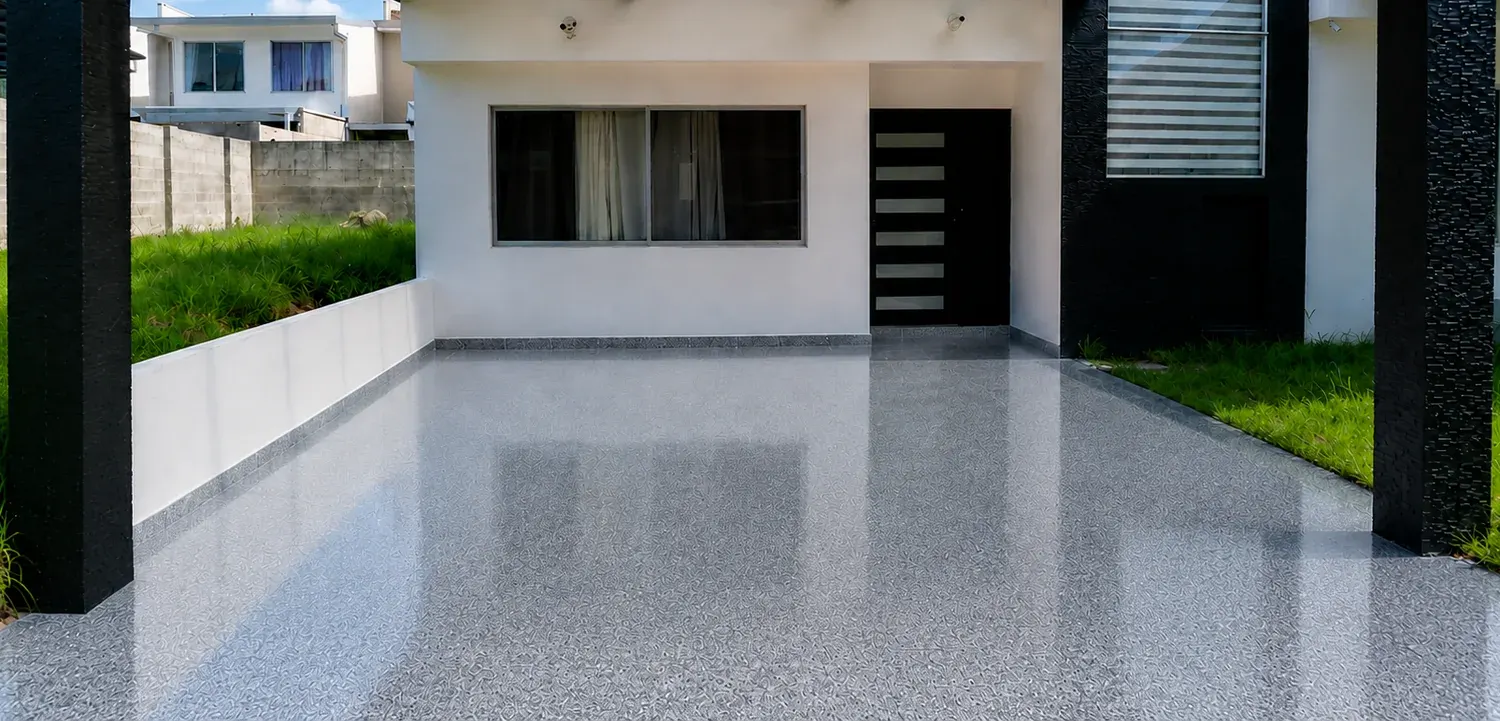
Hot tires are the classic test of a garage floor. After a drive the rubber arrives hot and soft, and on thin paints applied without preparation it can pull the film off as it cools. That is the most common reason “epoxy” floors peel exactly where the car parks.
A 100% solids system installed over mechanically prepared concrete is built for this: bond strength is 350 psi, and the concrete gives way before the bond does. What we do ask:
- Respect the 48 hours before driving on it. It is the single most important rule in this guide.
- Over time tires may leave a dark shadow where you always park. It usually comes off with neutral soap and a soft brush; on a flake floor you will hardly notice it.
- Wipe up oil drips and other fluids when you see them. If your car leaks, a drip tray saves you the work.
- If you use a jack or metal stands, put a board underneath to spread the load.
What to do about a scratch
- Clean it first. Many “scratches” are actually a scuff of rubber, metal or paint sitting on the floor. Neutral soap and a cloth, and they are gone.
- Check the depth. If your fingernail does not catch, it is a surface scratch in the seal coat: cosmetic, and the floor is not compromised. If it catches, or you can see concrete, the damage is deeper.
- Do not sand it or apply products yourself. A home fix usually ends up more visible than the scratch.
- Send us photos on WhatsApp. We will tell you whether it is worth a visit. Isolated damage is repaired by area; on metallic finishes the patch may show, and we will be upfront about that before doing it.
How often should it be resealed?
There is no honest number that fits everyone. It depends on traffic: a living room where people walk barefoot and a commercial parking area do not wear the same way. It also depends on the care described in this guide.
What we can tell you is what to watch for: an even loss of gloss along walkways that does not improve with cleaning, widespread fine scratching, or a flake floor that starts to feel rougher in the traffic lanes. When you see that, we assess it. A reseal applies a fresh seal coat over the existing system and brings the look back without redoing the floor.
If you are still deciding, the finish also affects how much wear shows. We cover that in flake or metallic?, and handover details are under process.