

The comparison, point by point
We are comparing a 100% solids epoxy system installed over mechanically prepared concrete against mid-range ceramic or porcelain tile, properly laid. Not the worst version of either.
| Criterion | Epoxy | Ceramic / porcelain tile |
|---|---|---|
| Grout lines | None: one continuous surface | Yes; grout stains and needs upkeep |
| Cleaning | Mop and neutral soap; nowhere for dirt to settle | The tile cleans easily; the grout does not |
| Visual continuity | A single plane with no cuts or pieces | Visible grid; large formats help |
| Impact | Resin absorbs knocks without cracking; a sharp object can mark it | A tile can crack or chip if something heavy is dropped |
| Chemicals and stains | Sealed, non-porous surface | Porcelain holds up well; grout is the weak point |
| Installation time | 3 to 5 working days; foot traffic at 24 h | Varies; demolition adds days, dust and debris |
| Repairability | Repaired by area; on metallic the patch may show | Swap the tile, if you can still find the same batch |
| Upfront cost | $70–$90/m² (flake) to $100–$120/m² (metallic), installed | Very wide range; cheaper options exist |
| Feel underfoot | Cool, similar to tile | Cool |
| Design | One of a kind: metallic veining, flake or flat color | Huge catalog of formats, stone and wood looks |
| Outdoors in full sun | Not its territory; best under a roof | A good choice with exterior-rated tile |
The real difference is grout
Most of what bothers people about a tile floor after a few years is not the tile. It is the grout. Grout is porous, soaks up grease and moisture, darkens along walkways and, in this climate, is where mildew shows up. You can seal it and scrub it, but that job never ends.
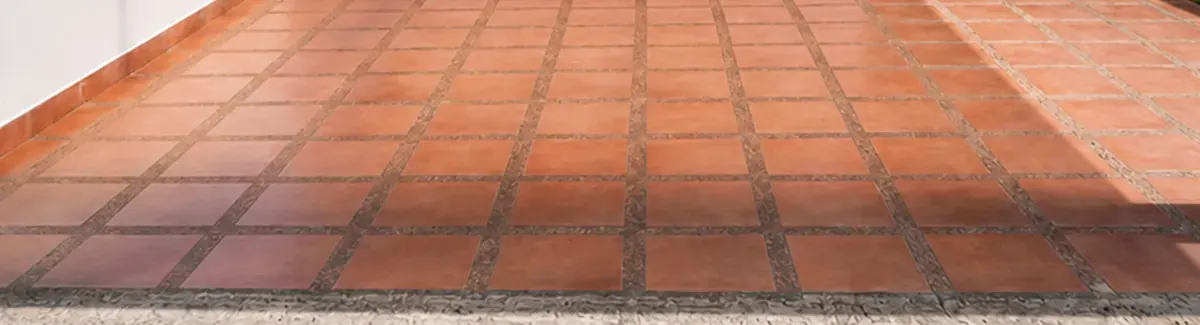
An epoxy floor is one continuous surface with no joints and no grout. There are no grooves for dirt to collect in, which is why it is used in kitchens, food plants, clinics and pharmacies, where cleaning is not a cosmetic matter. At home the effect is simpler: a mop, neutral soap, done.
When tile or porcelain is the better call
There are cases where we would tell you ourselves that we are not the best option:
- Outdoors in full sun. Patios, pool decks and open terraces. Epoxy is a system for interiors and covered areas; under constant direct sun and rain, a slip-rated exterior porcelain is the better choice. Covered terraces, on the other hand, are good epoxy territory.
- Very tight budgets. There is tile that costs well below a properly built epoxy system. If budget rules, plain tile laid well beats a cheap “epoxy” that is really paint. More on that in the cost guide.
- A taste for traditional formats. If what you love is patterned cement-look tile, wood-look planks or marble in pieces, that is tile. Epoxy has its own language; it does not imitate pieces.
- Slabs with unresolved moisture. If the assessment finds moisture coming up through the slab and it cannot reasonably be fixed, we do not install. Tile tolerates that condition better.
When epoxy wins
- Garages. Tires, oil, dropped tools. A flake floor with its natural slip-resistant texture takes it, and hides dust too. See homes and garages.
- Spaces where hygiene is critical. No joints, zero VOC and practically odorless during installation.
- Open-plan living. In a combined living, dining and kitchen area, one uninterrupted plane makes the room read larger. A metallic marble floor becomes the centerpiece of the design.
- Renovations without demolition. When the system can go over the existing floor, you skip the dust, the debris and the days of tear-out.
- Shops and offices that cannot close for long. Typical installation is 3 to 5 working days, with foot traffic at 24 hours. See retail and offices.
- Heavy traffic. In warehouses and industrial floors, tiles crack under forklifts and joints crumble. A surface bonded at 350 psi has no pieces to come loose.
Can epoxy be installed over existing tile?
In many cases, yes. It is one of the questions we hear most, and the answer depends on an on-site assessment. What we check:
- That the tiles are solidly bonded. The floor is tapped to find hollow or loose tiles. Those come out and get filled; if there are many, full removal makes more sense.
- That no moisture is rising through the slab.
- Heights. The system adds very little thickness, but doors, drains and transitions to other floors need checking.
If the tile passes, it is mechanically ground to remove the glaze and open the surface, the grout lines are filled so they do not telegraph through the resin, and the system is installed. If it does not pass, we tell you, and removal is quoted separately.
The assessment is free. In the meantime you can preview the result in See your space: upload a photo of your current floor and try finishes on it.