

Industrial and warehouses
Epoxy floors for industry, factories and warehouses
A plant floor works every day: forklifts, pallets, spills and washdowns. Epoxy seals the concrete, eliminates dusting and leaves a surface that cleans fast and looks orderly.
The starting point
The problem with the floor you have
Bare concrete looks indestructible, but it is porous and wears from the surface down.
- Dusting concrete
- Constant traffic grinds the top layer. That fine dust settles on product, packaging and machinery.
- Spills that stay
- Oils, fuels and process liquids soak into the concrete pores. The stain never comes out and the floor stays slick.
- Joints and cracks that open up
- Hard forklift wheels hit every edge until it chips, and every open joint collects dirt.
- Slow cleaning
- A rough, stained floor demands more water, more chemicals and more hours for a result that never looks clean.
The result
What changes with a seamless surface
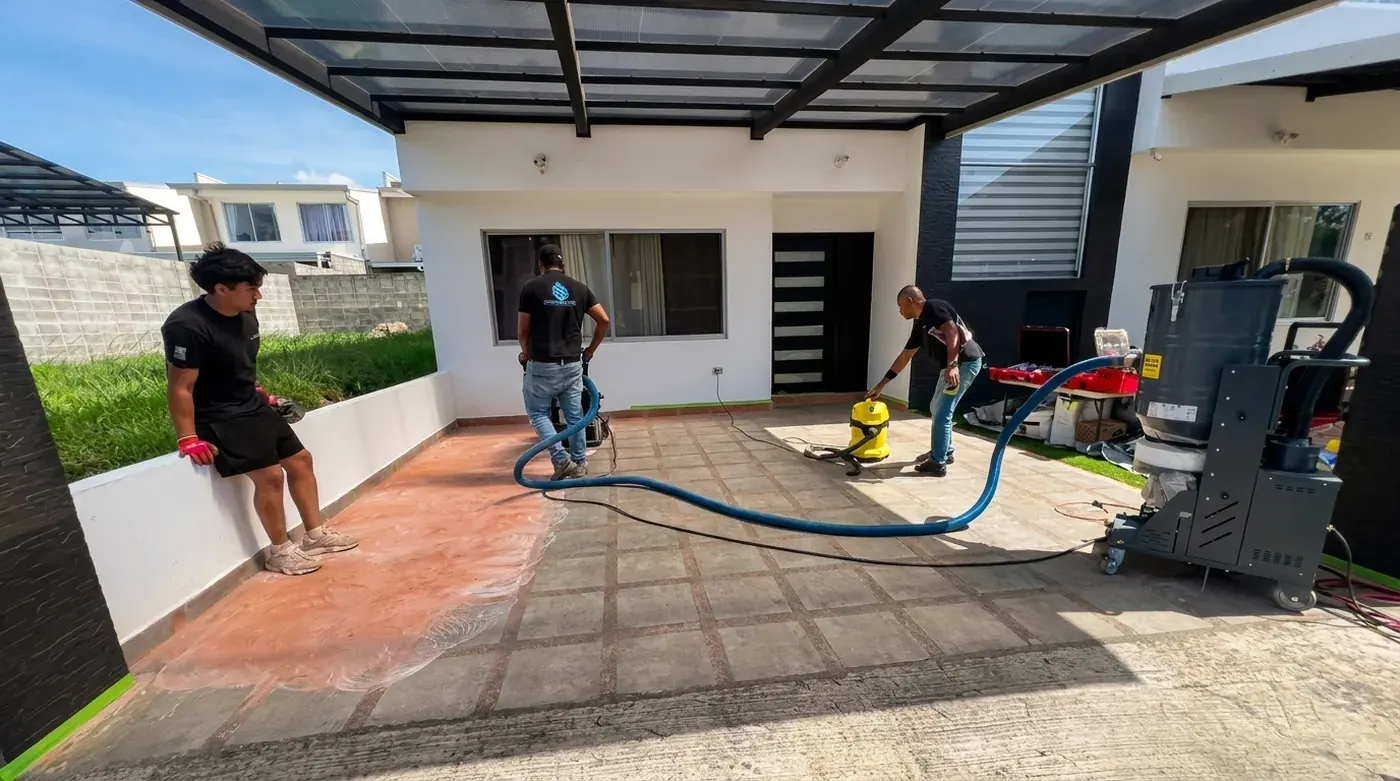
The coating seals the pores and anchors to mechanically prepared concrete.
- The concrete stops dusting: it is encapsulated under a 100% solids epoxy.
- Spills stay on the surface and get wiped up instead of soaking in.
- 350 psi bond strength: under stress, the concrete gives way before the coating does.
- Cracks are repaired during preparation, before the first coat.
- A light, uniform floor reflects more light and makes any spill or dropped part obvious.
- Vehicle traffic at 48 hours: the work can be scheduled over a long weekend or by sector.
Recommended system
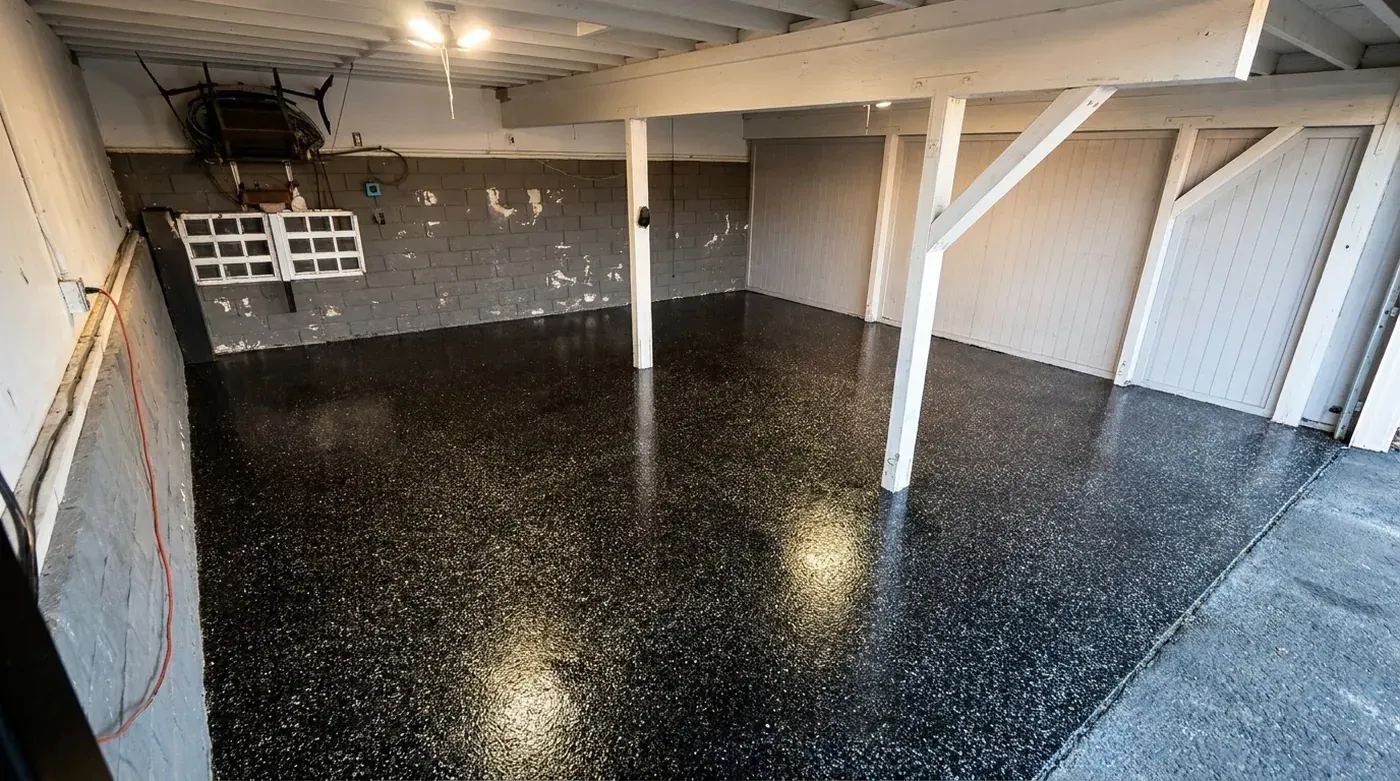
Solid color or flake, depending on the operation
On a plant floor, function comes first. We recommend two systems and decide between them at the assessment, based on traffic and the liquids present.
Solid color
Quoted per space
For production areas, storage and forklift aisles. Smooth, uniform and fast to wash. Gray and light tones improve visibility in a warehouse.
View the system →
15 finishesFlake
$70–$90 USD per m² installed
For wet zones, wash bays, workshops and pedestrian access. Full-broadcast flake adds slip-resistant texture and hides wear.
View the system →
The final price depends on the area, the condition of the substrate and the finish. We confirm it at the on-site assessment, which is free of charge.
Spec sheet
The numbers behind the finish
350 psi
bond strength: the concrete gives way first
48 h
until vehicle traffic
100%
solids in the EpoxyStarz epoxy base
0 COV
zero VOC and virtually odorless
How it’s done
Five steps, no surprises
In industrial work the assessment is the decisive stage: concrete moisture below 4% (ASTM F1869), pH of 9 or higher, and a surface profile of CSP 2 or above (ICRI 310.2R). Those readings define the system and the sector-by-sector schedule.
01
Assess
Site visit, measurements and concrete tests: moisture, pH and surface profile.
02
Design
System, finish and a physical sample for you to approve.
03
Prepare
Mechanical grinding or polishing, and crack repair.
04
Install
The layers of the chosen system, 3 to 5 business days depending on area and weather.
05
Hand over
With written care recommendations.
Questions
What clients usually ask
Does it hold up to forklift traffic?
The system is installed for vehicle traffic, which opens at 48 hours, with a 350 psi bond to the concrete. Forklift type, wheels and loads are reviewed at the assessment to define the right system.
Do we have to shut down the plant?
Only the sector being coated. The usual approach is to split the area into stages and schedule them during shutdowns, weekends or low-activity shifts. Typical installation takes 3 to 5 business days per stage, depending on area and weather.
What if the concrete is oil-stained or badly worn?
That is determined at the assessment. Mechanical preparation removes the contaminated layer and opens the pores; cracks and chipped edges are repaired before the first coat. If the substrate is not suitable, we tell you before quoting.
How much does an industrial epoxy floor cost?
Solid color is quoted per space, because the price depends on the area, the condition of the concrete and the use. The flake system runs $70–$90 USD per m² installed. The on-site assessment is free.
Keep exploring