

How each one looks
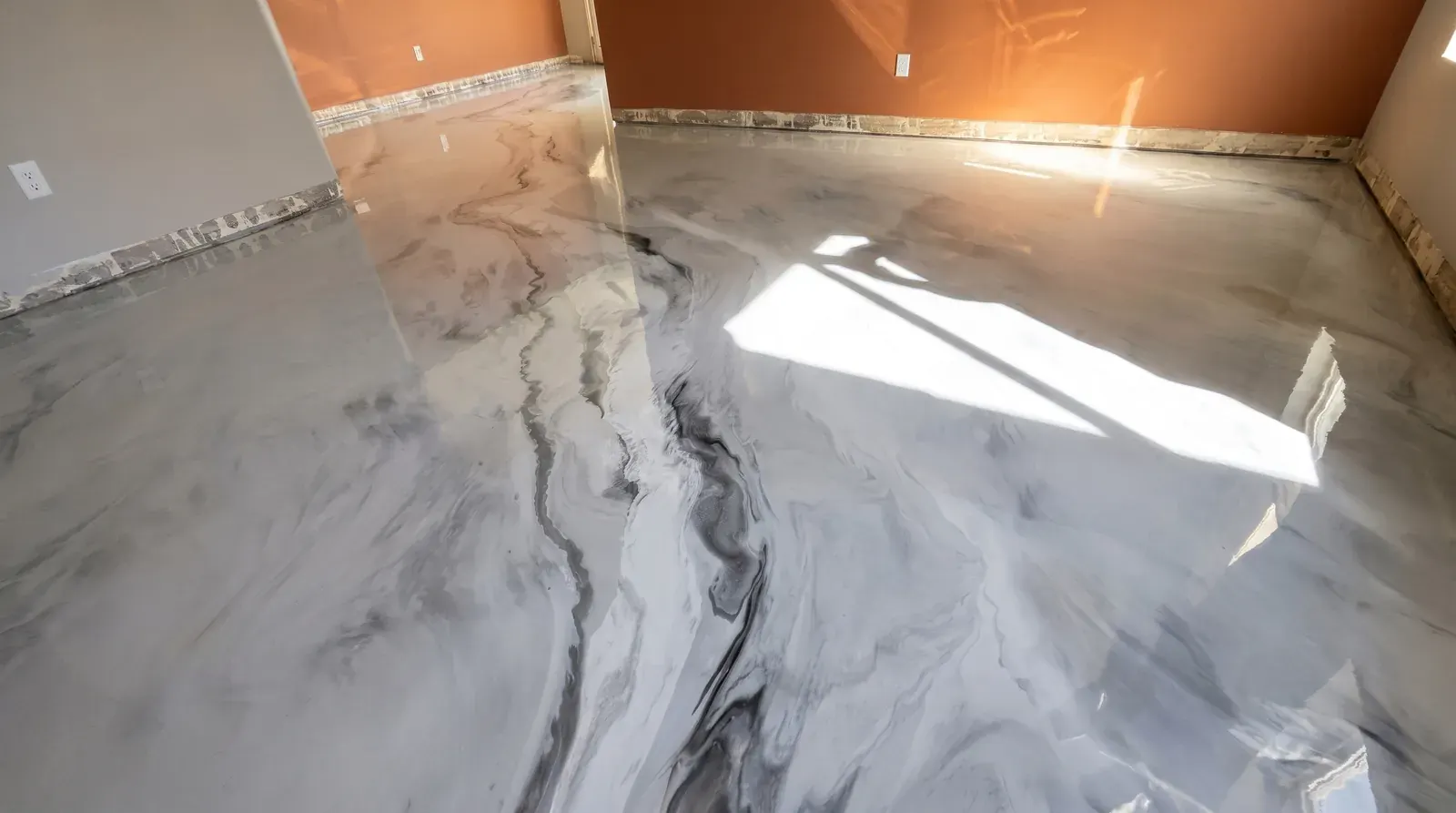
Metallic marble. Metallic pigments are moved through wet resin to create veins, clouds and depth, somewhere between polished stone and moving water. It is high gloss, and the floor shifts with the light through the day. Because the pattern comes from the installer’s hand and the way the resin flows, every floor is one of a kind: you choose colors and style, not an exact copy of a photo. There are 31 finishes, using pigments from U.S. Resin Supply.
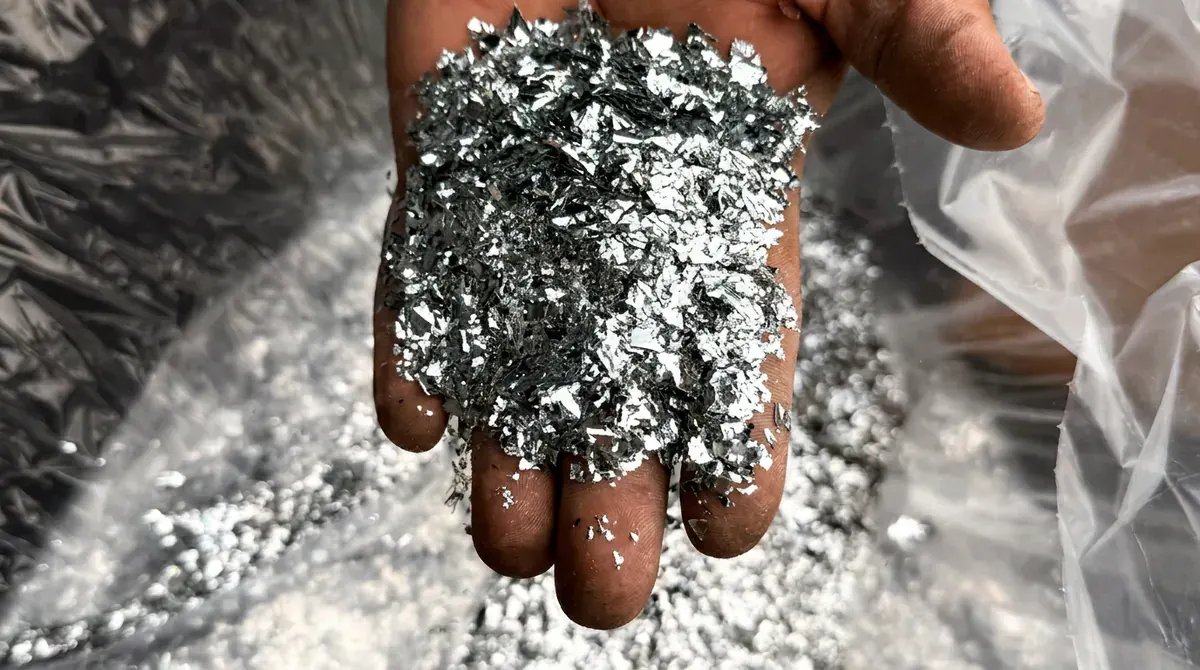
Flake. Colored chips (Torginol Signature Series) broadcast to full coverage over the base coat and sealed on top. From a distance it reads as a fine, even granite; up close, like a small-particle terrazzo. The result is predictable: what you see in the sample is what you get. There are 15 blends, from neutral grays to warm tones.
Solid color. The third option, often overlooked: one flat, even color with no veining or chips. Seven pre-mixed colors. It is the minimalist finish and the usual choice for industrial floors and warehouses. Details under solid color.
Texture: how it feels underfoot
Metallic and solid color are smooth, like glass. They feel soft barefoot and a mop glides across.
Flake has a natural slip-resistant texture: the chips leave a fine relief under the seal coat. That makes it the usual pick wherever the floor gets wet or sees tires: garages, parking areas, covered terraces, utility areas.
One practical side effect of the look: flake hides things. Dust, pet hair, footprints and small marks disappear into the speckle. Metallic, being smooth and glossy, shows dust and footprints more, the way a black car does next to a gray one. It is not a flaw, but it is worth knowing before you put it in a garage.
The price difference
- Flake: $70–$90/m² installed.
- Metallic: $100–$120/m² installed.
- Solid color: quoted per space.
On a 40 m² living and dining area, the gap between the two systems is around $1,200. Metallic costs more because of the handwork and the pigments. The concrete preparation, which is what secures the bond, is the same for both. For everything that affects price, read the cost guide or use the estimator.
A common approach in homes: metallic in the living areas and flake in the garage. Each system where it performs best, and the budget goes where it shows.
Our recommendation by space
| Space | Our pick | Why |
|---|---|---|
| Garage | Flake | Slip-resistant texture, hides dust and tire marks |
| Living, dining, kitchen | Metallic | The floor you look at; smooth and easy to mop |
| Shop or showroom | Metallic or flake | Metallic if the floor is part of the brand; flake for high traffic |
| Warehouse or industrial | Solid color or flake | Understated, functional, lets you mark out zones |
| Clinic, pharmacy, kitchen | Flake or solid color | Seamless with no joints; light tones that read as clean |
These are starting points, not rules. We have seen metallic garages that double as the main entrance to the house, and living rooms with a pale flake that look great. What matters is real use. Does it get wet? Do cars drive on it? Should the floor be the star or the backdrop? There is more context under spaces.
Maintenance: nearly identical, with one nuance
All three systems are continuous, sealed surfaces with no joints, cleaned with a mop and neutral soap. The nuance is visual. On a dark, glossy metallic, a fine scratch or a layer of dust is more noticeable; on flake you will hardly see it. If you have large pets, kids with wheeled toys or furniture that gets moved a lot, factor that into the tone you pick. The full routine is in the care and maintenance guide.
How to decide without guessing
- Start with use. Water or tires tip the scale toward flake. A space for living and entertaining tips it toward metallic.
- Browse the finish lab. All 53 real finishes across the three systems are there. Shortlist two or three.
- Try them in your space. In See your space you upload a photo and see the finish on your own floor, with your walls and your light. The photo is processed on your device. This is where most people rule options out: a tone you love in the catalog can clash with your furniture.
- Ask for the physical sample. During design we show you a real sample of the chosen finish. The screen points the way; the sample confirms it.